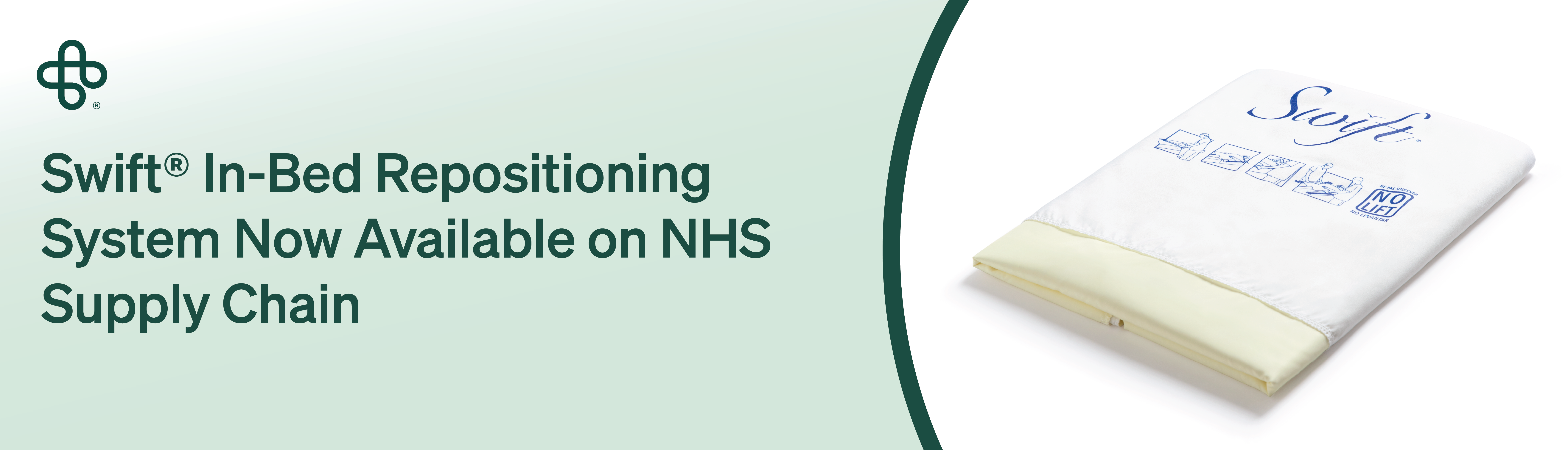
This document is an independent slide sheet evaluation originally produced by a Moving & Handling / Ergonomics team within an NHS organisation.
The evaluation was conducted to assess whether a cost-effective slide sheet option could deliver safe, effective, and ergonomically sound performance for patient repositioning. It combines:
- Independent blind user feedback from clinical keyworkers, and
- Laboratory friction performance data supplied by the manufacturer.
The report has been shared with MIP and is reproduced here with permission for educational and informational purposes.
To respect confidentiality and governance requirements:
- The NHS organisation has been anonymised
- Named competitor brands have been replaced with neutral terms (e.g. “Competitor A”)
- No clinical, patient, or staff-identifiable data is included
Other than anonymisation, the technical content and conclusions of the report have not been altered.
Relevant Guidance:
- NICE, HealthTech guidance: https://www.nice.org.uk/guidance/htg745
- NHS England - Information Governance: https://www.england.nhs.uk/ig/
- Information Commissioner’s Office - UK GDPR guidance: https://ico.org.uk/for-organisations/uk-gdpr-guidance-and-resources/
Slide Sheet Friction Performance Comparison Report
Executive Summary
MIP slide sheets were chosen for evaluation because they offered the most cost-effective option available to an NHS organisation. To ensure this cost advantage did not compromise safety or performance, two separate sources of evidence were reviewed:
Laboratory data provided by MIP, detailing results of static and kinetic friction testing; and
A blind user comparison test carried out internally within the organisation.
The laboratory data (Test Method T-8497) showed that MIP slide sheets required less force to initiate and maintain movement compared with other brands tested. In the blind comparison with Competitor A slide sheets, keyworkers generally preferred MIP, describing them as smoother, easier to use, and requiring less physical effort during patient handling.
Overall, the combined findings indicate that MIP slide sheets provide a safe, ergonomic, and cost-efficient solution for patient repositioning across an NHS organisation.
Summary Statement:
MIP slide sheets were selected for evaluation as the most cost-effective option, with analysis of manufacturer-supplied data and independent blind user testing indicating that they deliver safe, smooth, and ergonomically favourable performance, supporting both clinical safety and cost-efficiency.
Overview
This evaluation was undertaken to review the performance and value for money of slide sheets currently used within an NHS organisation.
MIP slide sheets were tested as they offered the best cost option during procurement discussions, and it was important to ensure that this did not compromise safety, quality, or usability for staff and patients.
The trial included assessment of slide sheet performance across all key bed-based movements — repositioning up and down the bed, side-to-side adjustments, and lateral transfers between surfaces. These tasks were selected as they represented the most frequent and ergonomically demanding manual handling activities undertaken by staff, providing a realistic evaluation of glide performance, handling effort, and patient safety in everyday clinical practice.
Each activity was observed and evaluated through user feedback on ease of movement, level of physical effort required, and overall control during patient repositioning. The findings from these practical assessments were consistent with the laboratory friction data, with users reporting smoother movement and reduced effort when using the MIP slide sheets.
The overall aim was to identify which product provided the best balance of patient safety, staff ergonomics and financial efficiency across wards and departments.
- Blind User Evaluation
A blind comparison test was undertaken between the MIP slide sheets and Competitor A slide sheets, with participation from keyworkers within an NHS organisation.
Keyworkers were not informed which brand they were using, allowing for unbiased, experience-based feedback.
Following patient-handling simulations, participants reported a preference for the MIP slide sheets, describing them as smoother, easier to use, and requiring less physical effort to reposition patients.
This feedback highlights the importance of glide characteristics and ease of use in supporting safe and efficient manual handling practices.
- Laboratory Data Provided by MIP
In addition to the blind trial, the moving and handling ergonomics team reviewed laboratory test data supplied by MIP.
The data compared MIP Internal slide sheets with Competitor B and Competitor C using Test Method T-8497, a recognised method for assessing frictional performance.
The testing measured both static (force to initiate movement) and kinetic (force to maintain movement) friction in North–South (N-S) and East–West (E-W) directions.
Frictional performance was reported as force (lbf) and coefficient of friction (μ) — with lower values indicating smoother glide and less resistance during patient transfer.
Static Friction (μₛ)
|
Direction |
MIP Internal |
Competitor B |
Competitor C |
|
N-S |
0.23 |
0.28 |
0.26 |
|
E-W |
0.24 |
0.28 |
0.24 |
Interpretation:
MIP shows the lowest static friction, indicating easier initial movement and consistent performance across directions.
Summary: MIP Internal required less effort to initiate movement than both competitors, suggesting a smoother surface finish and consistent coating application.
Kinetic Friction (μₖ)
|
Direction |
MIP Internal |
Competitor B |
Competitor C |
|
N-S |
0.23 |
0.28 |
0.24 |
|
E-W |
0.22 |
0.28 |
0.26 |
Interpretation:
MIP retained low resistance during continuous movement, suggesting a smoother glide and reduced handling effort for staff.
Summary: During ongoing transfer, MIP Internal maintained lower kinetic friction, meaning reduced drag on patient tissue and less handling effort.
Force (lbf) Comparison
|
Direction |
MIP (avg) |
Competitor A (avg) |
Competitor B (avg) |
Difference |
|
Static (N-S/E-W) |
12.36 lbf |
15.0 lbf |
13.66 lbf |
MIP ≈ 18 % lower than A, ≈ 10 % lower than B
|
|
Kinetic (N-S/E-W) |
11.81 lbf |
14.7 lbf |
12.8 lbf |
MIP ≈ 20 % lower than A, ≈ 8 % lower than B
|
Interpretation:
The lower lbf values indicate that MIP sheets required less physical effort to move a load, which may help reduce musculoskeletal strain during repositioning.
Directional Consistency
MIP showed very small variance between N-S and E-W friction (≤ 0.02 μ), whereas Competitor B showed up to 0.04 μ difference — suggesting greater manufacturing consistency and uniform glide performance in MIP’s design.
Overall Evaluation
|
Criterion |
Best Performer |
Notes |
|
Ease of Initiation (Static μ) |
MIP |
Lower measured resistance overall |
|
Smooth Glide (Kinetic μ) |
MIP |
Stable low friction during movement |
|
Directional Consistency |
MIP |
Minimal variation between axes |
|
Handling Effort Required |
MIP |
Lower average force in lbf |
Clinical Relevance
Lower static and kinetic friction are associated with reduced handling effort, potentially lowering staff strain and minimising shear risk to skin.
Consistent frictional performance across directions may improve predictability and control during transfers.
The blind user preference among keyworkers supports the laboratory data, suggesting that the measured differences in friction translate into practical handling benefits.
Reduced shear potential supports skin integrity and aligns with tissue viability objectives and NICE guidance for pressure ulcer prevention.
Conclusion
Based on both manufacturer-provided laboratory data and independent blind user testing, MIP Internal slide sheets demonstrated lower friction and greater consistency compared with comparators.
They showed:
- Lower coefficients of friction (static and kinetic)
- Reduced handling forces (lbf)
- Greater directional consistency
- Positive real-world user feedback
These findings support the use and wider adoption of MIP Internal slide sheets as part of safe and ergonomic patient-handling practice, providing both clinical and cost-efficiency benefits within an NHS organisation.
Read or download the full independent evaluation here.